
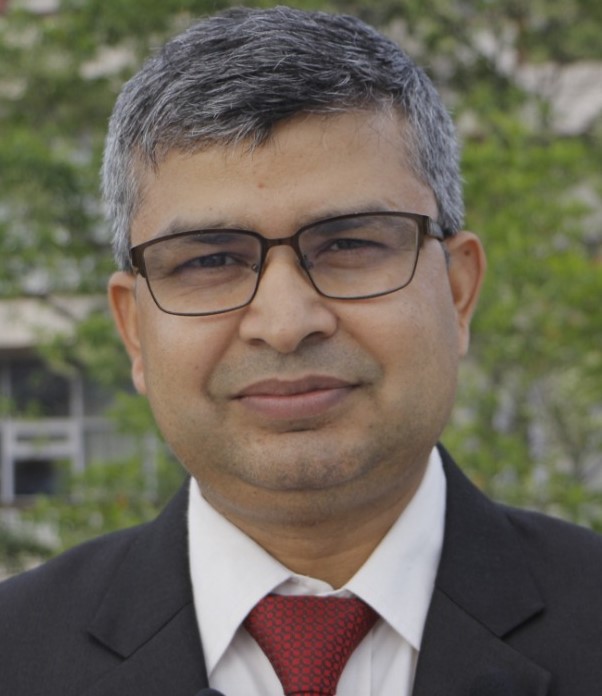
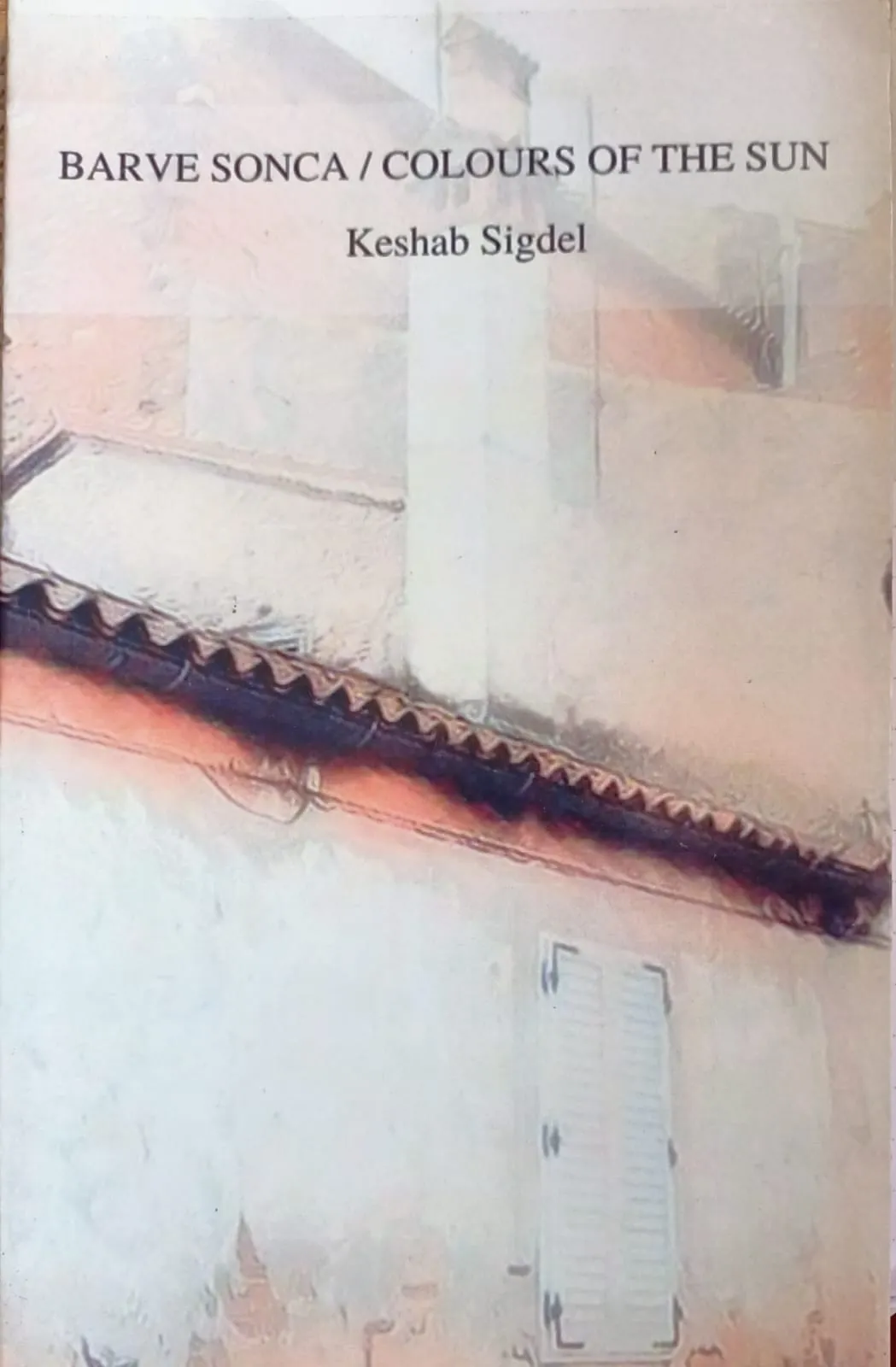
Keshab Sigdel (1979) is a Nepali poet, editor, academic and rights activist. Heteaches Poetry and Literary Theories and Criticism at Tribhuvan University. He is the author of poetry collections Samaya Bighatan (2007), Six Strings (co-authored, 2012), Colour of the Sun (2017) and Embargo (French translation by Alexandra Crette, 2025).
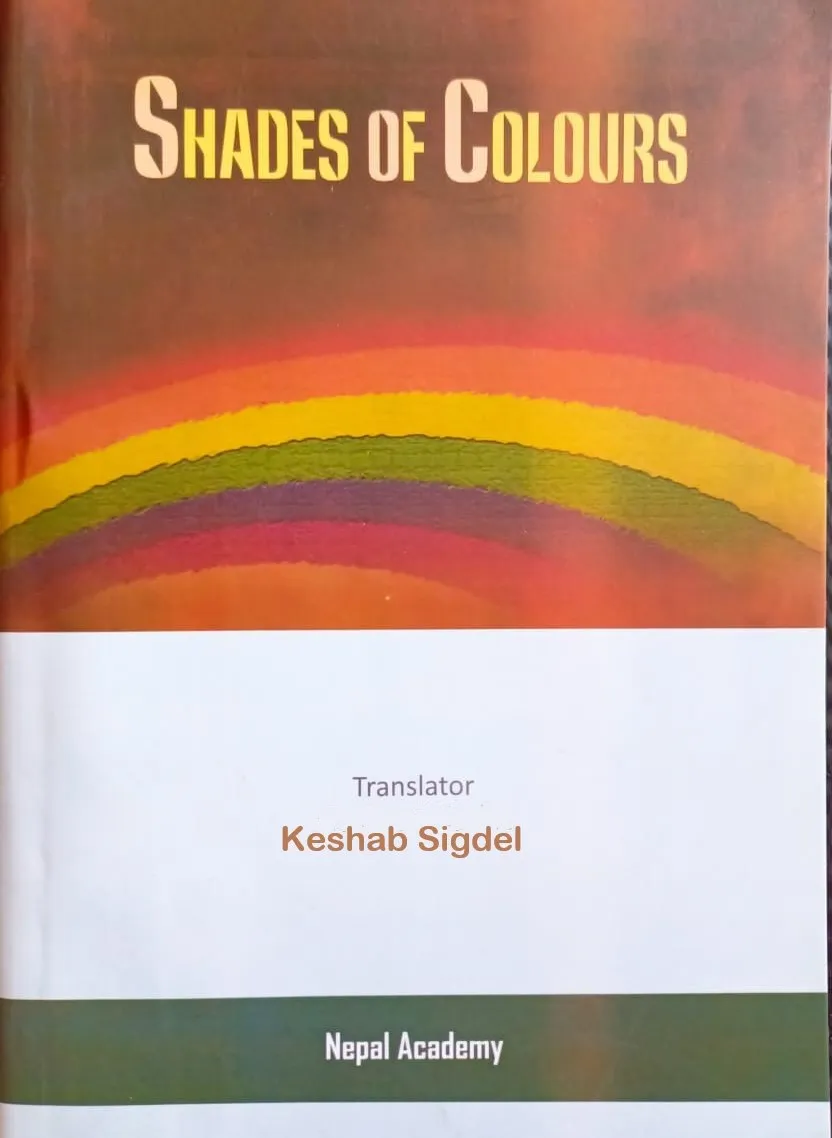
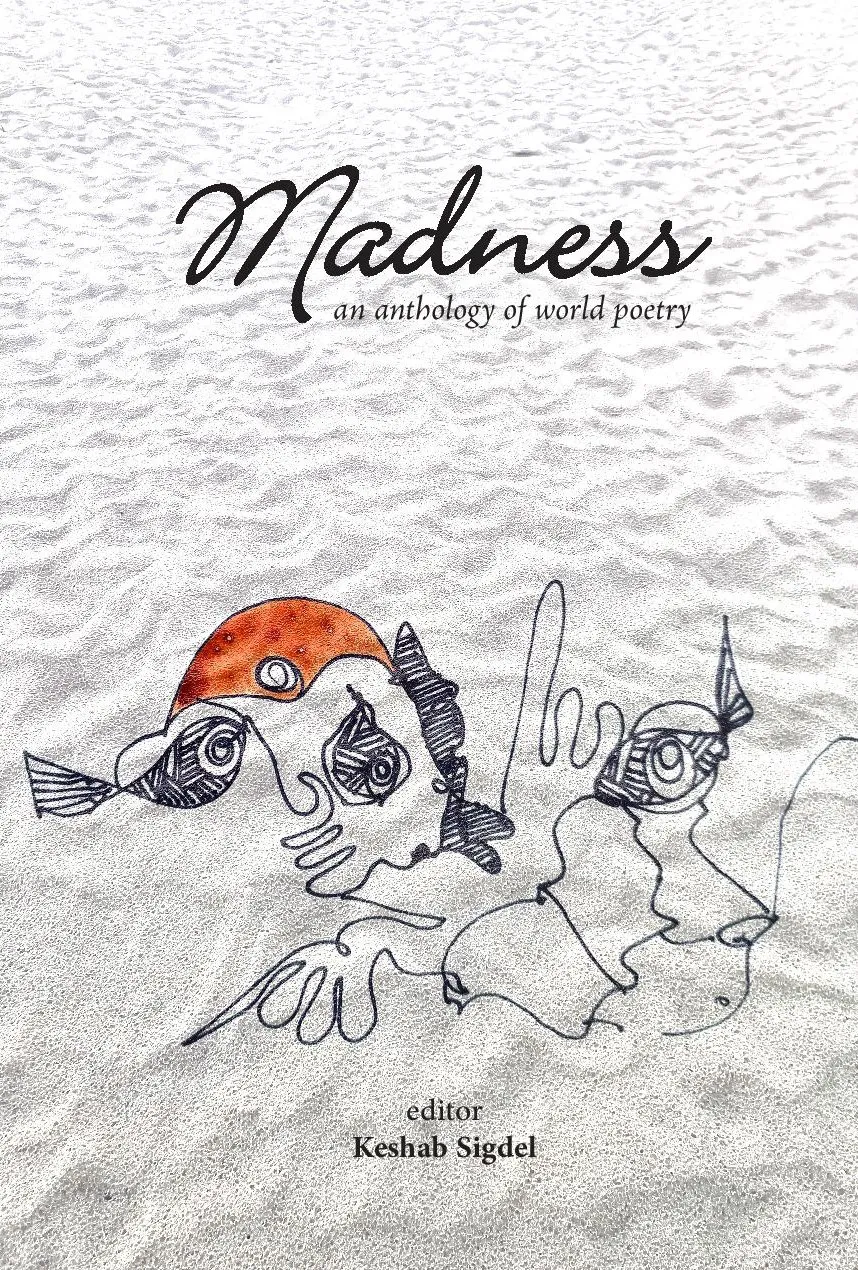
His other works include atranslation of indigenous Nepali poetry, Shades of Colour (2021), Contemporary Chinese Poetry (Nepali translation, 2026) and an edited volume, Madness: An Anthology of World Poetry (2023). Besides poetry, he also writes fiction, literary essays and plays. He also edited Poetry Planetariat (World Poetry Movement), and co-edited Of Nepalese Clay (Society of Nepali Writers in English) and Rupantaran (Nepal Academy).
He is anthologized in South Asia in Verse: Earth and Embers (Speaking Tigers Books, 2026), Anthology: Contemporary World Poetry (Kathak, 2026), Kavya: Representative Nepali Poetry in English (Grey Sparrow Press/Vajra, 2022/2023), Americans and Others: An Anthology of International Poets (Italy), Anthologie POP: Halte au feu ! (France), A World Without Wars: Overthrowing Capitalism (USA), Boda Boda Anthem and Other Poems: A Kampala Poetry Anthology (Uganda) and Anandaotsavach Bishwosetu (Marathi anthology; Hastakshar, 2025).
His poems have been translated into more than 20 languages and have appeared in different magazines including Balkan Herald (Serbia), Folket i Bild (Sweden), Poesis (Slovenia), Syndic Journal (USA), Snow Jewel (USA), Banmuang (Thailand), Azhar: Revisita Poetica (Mexico), Poezia (Romaina), Tupel Quaterly (China), Chinese Language Monthly (China), Rendition of International Poetry (China), World Poetry Magazine (Greece), The Art of Being Human (Canada), Kalenin sesi (Turkey), The Silk Road Today (Egypt), Le National (Haiti), JUNPA (Japan), CNP News (South Korea), Van Nghe (Vietam), Poetry Planetariat (Columbia), Adabiyat (Kazakhstan), Kabyle (Algeria), Shirisherdalpala (Bangladesh), Kritya (India), Gyanodaya (India) Of Nepalese Clay (Nepal), Kavita (Nepal), Madhuparka (Nepal), and Kalashree (Nepal),
He is featured in poetry festivals and events in India, China, Pakistan, Sri Lanka, Bangladesh, Myanmar, Thailand, Indonesia, Turkey, Iran, Colombia, Venezuela, and Slovenia.
He is also actively involved in Nepal’s human rights movement. He has served as the Vice Chairperson and the Board Member of the Nepal Section of Amnesty International from 2004 to 2010. He has travelled widely across the country as a resource person in human rights education/training for youths, teachers, women activists, police officers, and parliamentarians. He even faced several arrests during human rights campaigns in his country.
He is the recipient of the ‘Bhanubhakta Gold Medal for Literature’ (Culture Ministry of Nepal, 2014), ‘Yuwa Barsa Moti Puraskar’ (National Youth Fund, 2018), and ‘Kalashree National Youth Award for Literature’ (2022), and is nominated for SAARC Literature Award (Lifetime Achievement) 2026 by Foundation of SAARC Writers and Literature, New Delhi. He is working on his first long fiction depicting the impacts of a decade-long armed conflict in Nepal.
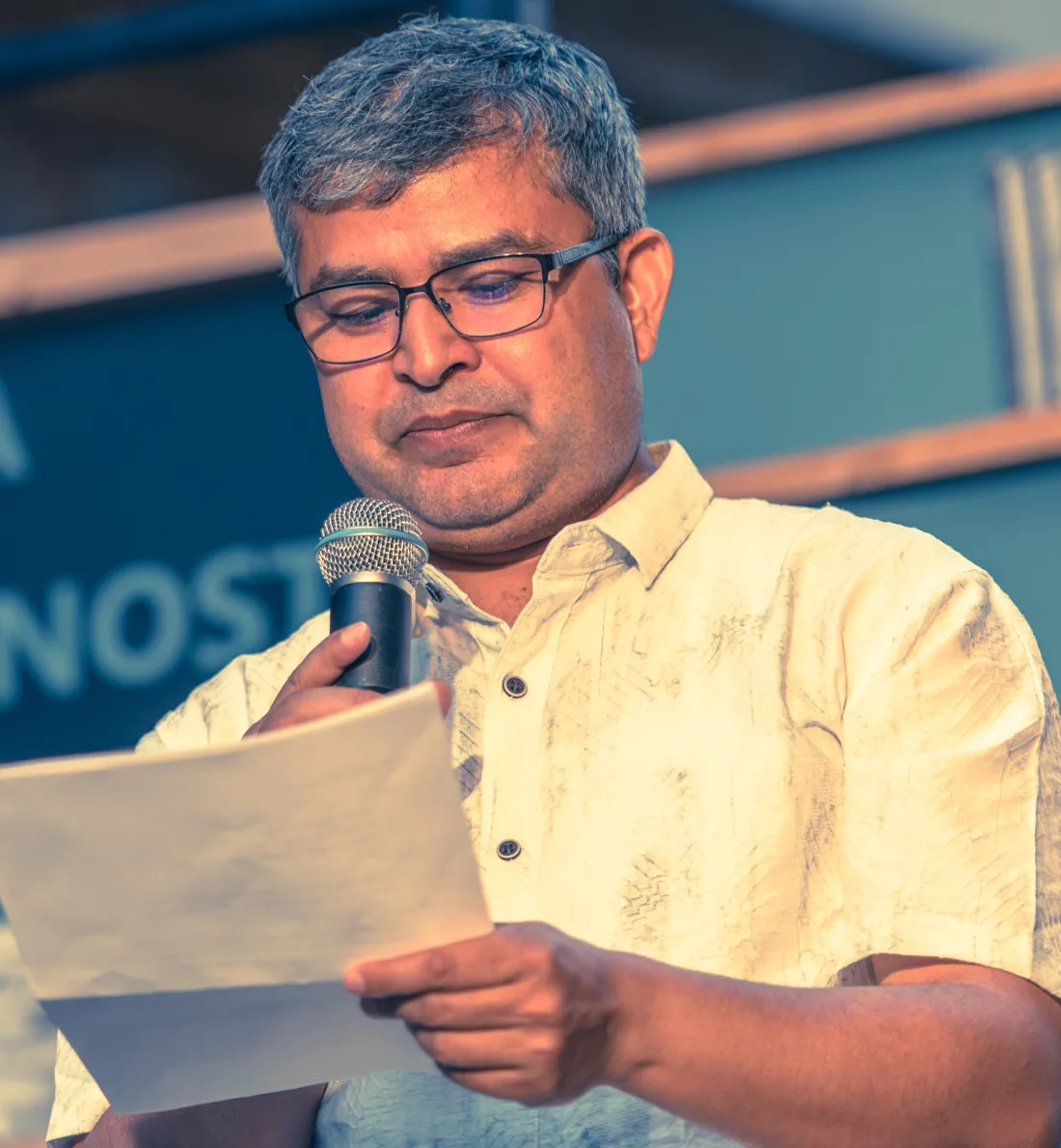
With the Waves of Rara
Deceiving the pine trees standing in sentry
The moon flirts with the lake
In response
The lake creates ripples of waves
And splashes as if it were a rehearsal of an enticing dance
Of a winter night!
The moon, as always,
Continues its own course
In that caliginous night
The lake sees the moon’s revived youthfulness
Its seductive appearance
Excites the lake
That it liberates in the waves.
In the light of the moon
The lake appears intriguing
My sickening heart
Becomes even more impatient
And, to pacify the unquenched desires
My imagination dives into the lake.
As the night exceeds
The breath of the hostlers
Evaporate and dissolve in the sky
And the horses moving from the alleys nearby
Wake up the lazy sleeps
With their neck-bells.
Travelers with their bag-packs
Spend a night in the tents at the bank of Rara
And anxiously wait for the sun to come out
In the morning,
They pick up their cameras
And click a photograph
Of the sun’s reflection
On the lake.
I keep waiting
For the moon to come back again;
When the birds and horses sleep
Wearing the night’s somber
I prepare myself to consume
The excitement of the lake
Rippling towards the edges
In the obscene light of the moon!
(Translated from Nepali by the poet)
—
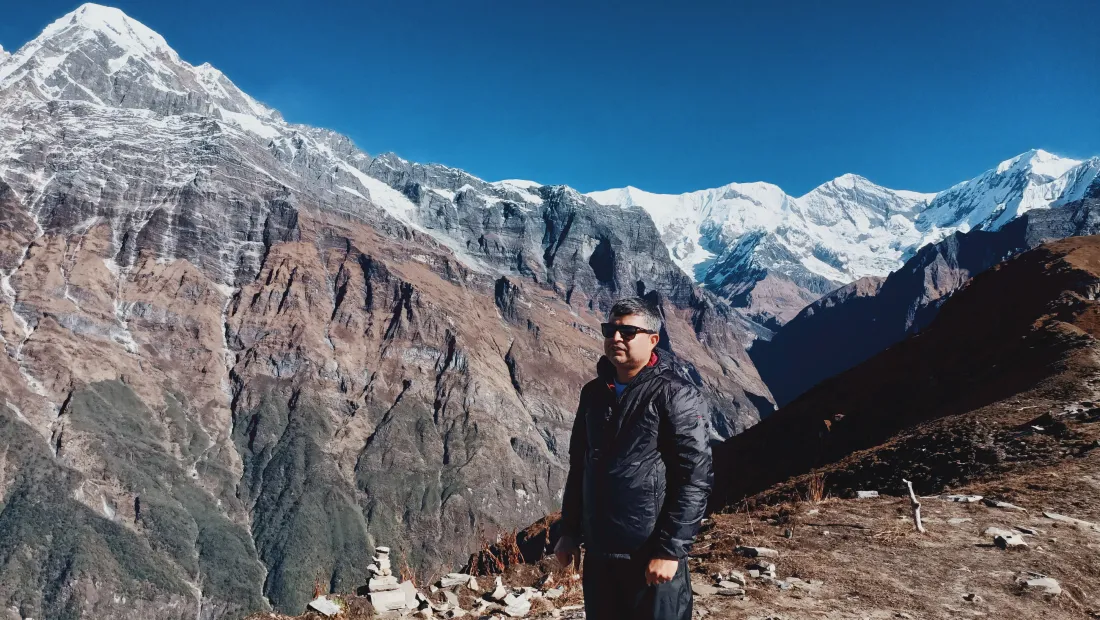
* Rara is the biggest and deepest freshwater lake in the Himalayas of Nepal.
An Evening
Each day before the sun sets
Cows return to their sheds
Blowing dust along their trails
The goat’s kid that had parted from its flock
Comes hopping at the yard of the house
And looks reassured.
Somewhere around the guava grove
The soft sound of the beetles
Grow into a strong melody.
In its hide-and-seek movement through tiny clouds
The moon glitters.
After keeping safe his slippers with the blue straps
Chádani’s father sits with his legs crossed at the porch
He takes out a leaf-wrapped tobacco stick
And with a loud voice
Asks for a coal-fire to kindle it.
This way, since many years,
This old house has composed a melody
Of its happiness.
Unexpectedly, today
The cows did not return through their dusty trails
Nor did the goat’s kid arrive hopping as usual.
The frogs croak incessantly
Probably to invite rain in the village
Chádani’s father’s slippers are found
With their broken straps
Below the guava tree nearby our house.
Due to some unknown fear
I am sweating.
At the edge of a paddy field
There is a cloth, completely drenched.
As the moon grows dull covered by the clouds
I am unable to discern
Whether that piece of cloth
Is a flag of victory
Or an indication of my despair!
(Translated from Nepali by the poet)
Wonders of a Leaf
Lying in bed
I dream of a caterpillar.
The caterpillar stops a while,
Dreams of a leaf
and resumes!
I lie, while
the caterpillar soothes me,
crawls upon me
and excites me with its
innumerable hands and feet.
Belly upon the belly,
caterpillar and me –
intoxicated,
we live a complete dream.
The caterpillar –
touches me,
gets aroused,
squeezes and sucks me,
and, transforms itself into a butterfly.
I, too, dream,
get excited with the touch,
and offer myself to be eaten up;
But, left with a mystic of life
I dream and wonder:
if the butterfly is my love,
my ultimate dream.
Why Does the Bridge Exist?
As my daughter rides on my back along the Dhobikhola,
like a victorious emperor she asks me everything that crosses her
mind. The only difference I discern is that the emperor could
measure his authority with his questions.
My daughter strives to give me a higher status than that of the
emperor, as if her father were the wisest and the most powerful
man in the world, as if her father possessed answers to
all the questions she could think of. What else then?
Like a princess on a jaunt, she makes a sedan chair
on her father’s shoulders and showers him with questions.
While crossing the bridge over the Dhobikhola
she asks, “Baba, why do we have this bridge here?”
“We need a bridge to go across the stream, my daughter,”
I reply. The answer doesn’t satisfy her. The Dhobikhola
suffocates in piles of rubbish thrown into it. A man in rags
continues sifting through the garbage for plastic bags and dogs
bark at him from garbage piles.
My daughter averts her gaze, and asks, “Can’t you cross the
stream without a bridge?”
Why would you need a bridge to cross a stream that doesn’t have water to fill
the ditches? I ask myself. I say, “These vehicles can’t go across
without a bridge.” I try to satisfy her. “This bridge separates
Babarmahal from Baneswor,” I explain.
“Baba, would not Babarmahal and Baneswor become one if not
for the bridge?” The question she asks shakes the foundations of
my belief.
—Does a bridge connect us or keep us apart?
—I keep contemplating the question.
(Translated from Nepali by Khem K Aryal)
Death Note of a Maniac
A tree fell
And became a log.
The time the tree lived ceased abruptly
And became history.
Men exhumed the history
And recreated memories.
They again carved those memories on the log
And made new expressions of life.
Outside the window, there are no trees left now!
Question
(In memory of the victims of Russia-Ukraine war)
After the winter rain stops
The sky glows with the rising sun.
When the farmer sees
The field and the plants warmed up,
And finds the smell of the soil intoxicating,
He experiences happiness within.
He remembers his daughter uttering “ting flower”
Once he sees acmellaoleracea grown on the ridge
And smiles in a way that goes unnoticed by himself
He scrapes the canal buried by time
And makes it flow.
Overwhelmed by the memory of his childhood
He leaves the weed of common vetch
Grow bushy.
As the heat of the sun rises to the limit
Sweat flows through the posterior of the ears
And he wipes it again and again
With a towel, unannoyed,
He rather holds high a karuwa,*
Opens his mouth, facing toward the sky,
And quenches his thirst.
Before the first drop of water reaches his throat
He sees a sky covered with smoke
And a bird-like object
Falls indiscriminately near the ridge of the field
Suffocated by the lump of smoke.
He tries to disbelieve his own vision
And wipes his acrid eyes with water in the karuwa
Then he penetrates the smoke cloud with his contracted eyes
Only to see the destruction of his happiness.
Who, for no reason,
Bombarded the sky with missiles of ego
To let common vetch and ting-flowers
Get burnt
Breaking hopes, and
Dismantling the melody of life?
(Translated from Nepali by the poet)
—
*Karuwais a narrow-necked wide-bodied brass water pot with a spout.
Comments
No comments yet. Be the first to comment.